The short answer
The Serengeti is Tanzania's largest and most famous national park — roughly 14,750 km² of plains, woodland and rivers. It hosts the Great Migration year-round and offers arguably Africa's best big-cat viewing. Different regions shine in different seasons, so where you stay should follow where the herds and the action are.
The name means 'endless plains' in Maasai, and that's exactly what the Serengeti delivers — a horizon-to-horizon grassland that hosts the greatest concentration of large mammals on Earth. It's the heart of any northern Tanzania safari and the stage for the Great Migration. Here's how to make the most of it.
See Serengeti safaris →What makes the Serengeti special
At around 14,750 km², the Serengeti is vast and varied — short-grass plains in the south, wooded hills and rocky kopjes in the centre, and rivers in the north and west. That variety supports enormous numbers of lion, cheetah and leopard, alongside elephant, giraffe, hippo and endless plains game.
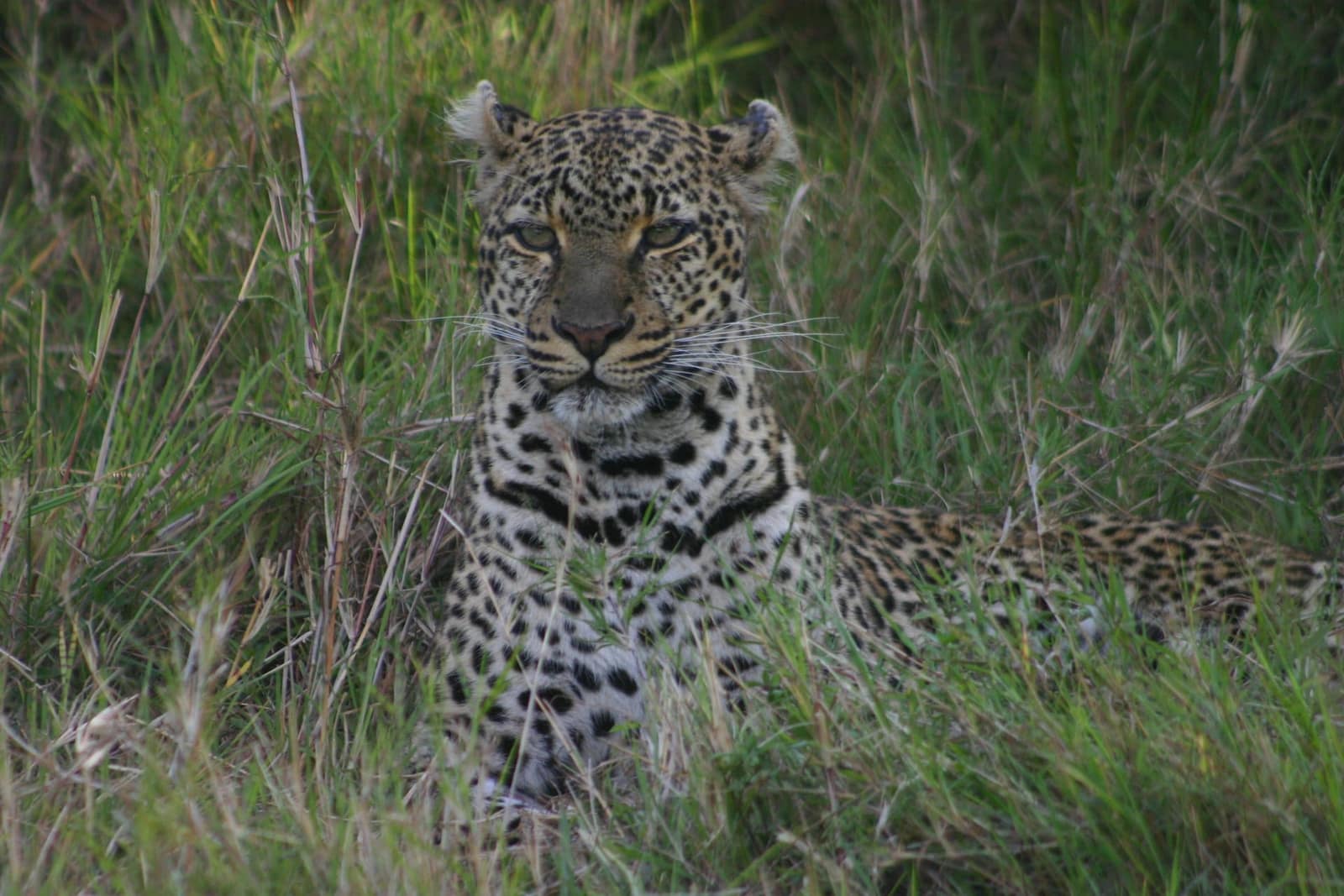
It's one of the few places where you can watch a cheetah hunt across open grassland or find a leopard draped in a riverine tree — the big-cat viewing is world-class.
Where to go, and when
The Serengeti's regions take turns in the spotlight as the Migration moves through. Matching your base to the season is the single biggest factor in a great Serengeti safari.
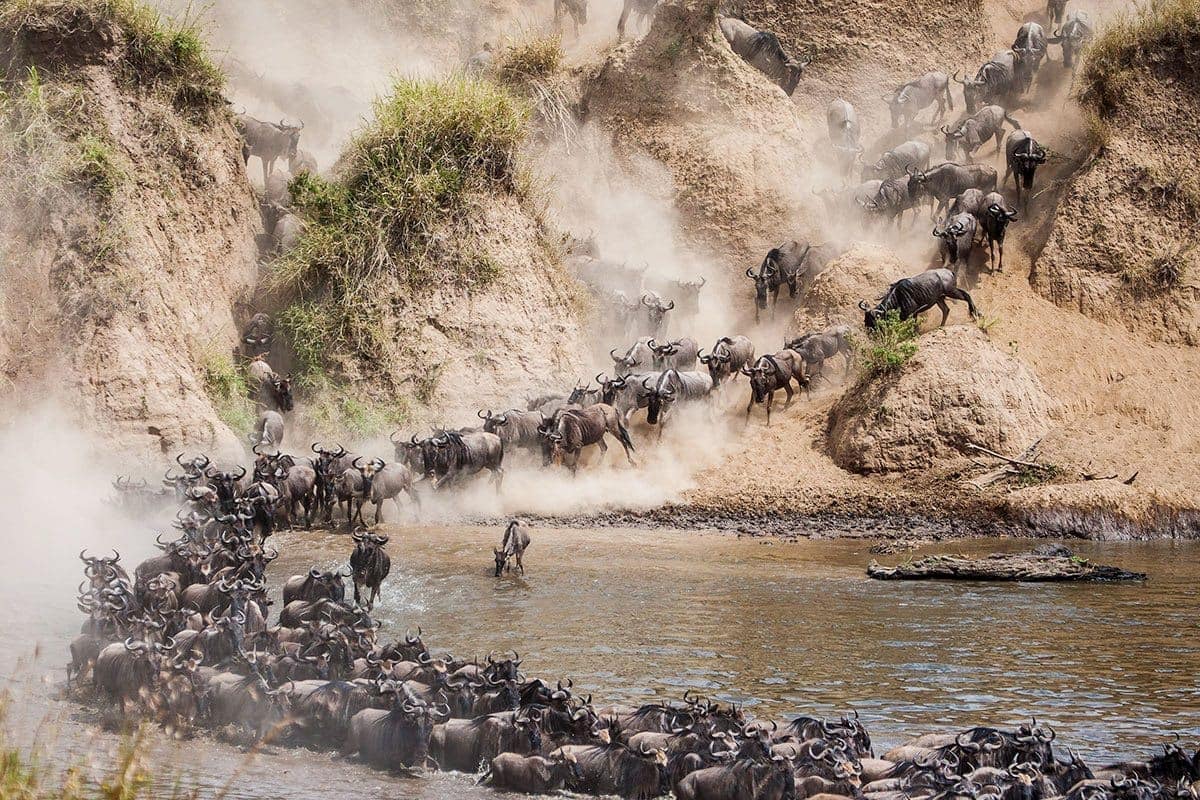
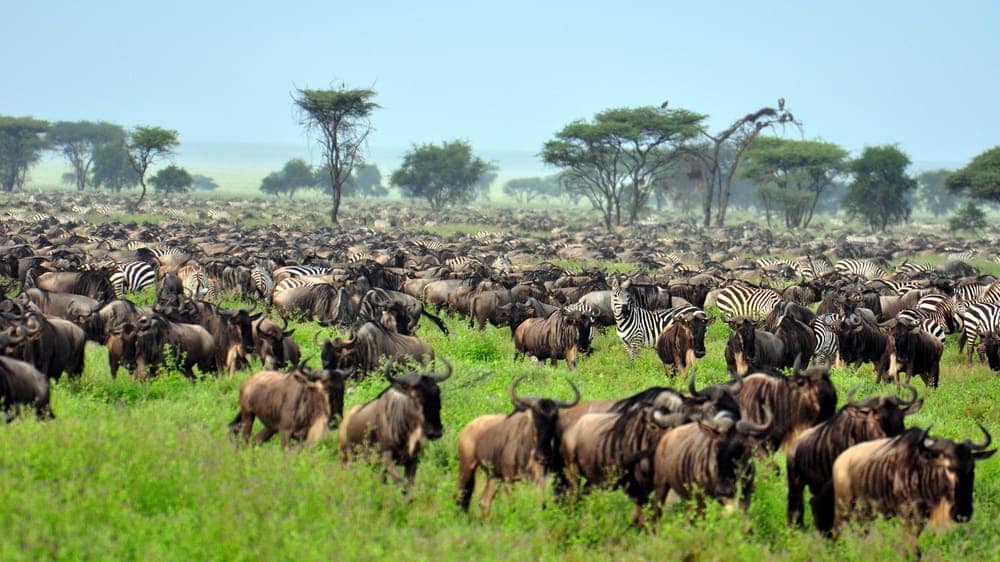
Roughly two million wildebeest and zebra circle the Serengeti–Mara ecosystem every year, chasing the rains and fresh grass. There's no single 'migration season' — only a question of where the herds are in the cycle when you travel.
Got a question while you read? Ombeni answers personally — usually within a few hours.
See Serengeti safaris →Regions in brief
- ›Southern Serengeti & Ndutu — calving season (Jan–Feb), open predator-rich plains
- ›Central Serengeti (Seronera) — superb year-round big-cat viewing, always worth it
- ›Western Corridor — Grumeti river drama in the middle of the year
- ›Northern Serengeti — the Mara River crossings (Jul–Sep), remote and quieter
Good to know
Short on time? The central Seronera area has excellent resident wildlife all year, so it's the safest single base if your dates don't line up with the herds.
Getting there
Most safaris drive into the Serengeti via the Ngorongoro highlands, taking in the crater and Olduvai Gorge on the way — a spectacular overland route. For the far north or to save time, you can fly into one of the park's airstrips and start your game drives immediately. We can plan either approach.
Frequently Asked Questions
Ready to take the next step?
See Serengeti safaris →