The short answer
A classic Tanzania safari follows the northern circuit — Tarangire, Lake Manyara, the Ngorongoro Crater and the Serengeti — usually over five to nine days. The Serengeti hosts the Great Migration year-round in different areas, the dry season (June–October) offers the easiest wildlife viewing, and the calving season (January–February) is a spectacular alternative. Most travellers see the Big Five.
Northern Tanzania is, for many people, the greatest safari destination on Earth — home to the Serengeti, the Ngorongoro Crater and the Great Migration. But a brilliant safari is a planned safari: the right parks, in the right season, over the right number of days. This guide pulls together everything that matters so you can picture your trip and plan it well.
Browse all our safaris →The northern circuit in a nutshell
Most Tanzania safaris run through four headline parks in the north, each with its own character: Tarangire for its elephants and baobabs, Lake Manyara for its forest, flamingos and tree-climbing lions, the Ngorongoro Crater for its astonishing density of wildlife, and the vast Serengeti for big cats and the Migration.
You can sample these over a short trip or string them together over a week or more. The longer you go, the deeper into the Serengeti you reach — which is where the Migration and the best big-cat action usually are.
| Park | Famous for | Good for |
|---|---|---|
| Tarangire | Elephant herds, baobab trees | Dry-season game, fewer crowds |
| Lake Manyara | Flamingos, tree-climbing lions | A scenic half/full day |
| Ngorongoro | Big Five in a crater | Guaranteed density, one epic day |
| Serengeti | Big cats, the Migration | The main event — give it time |
Follow the Great Migration
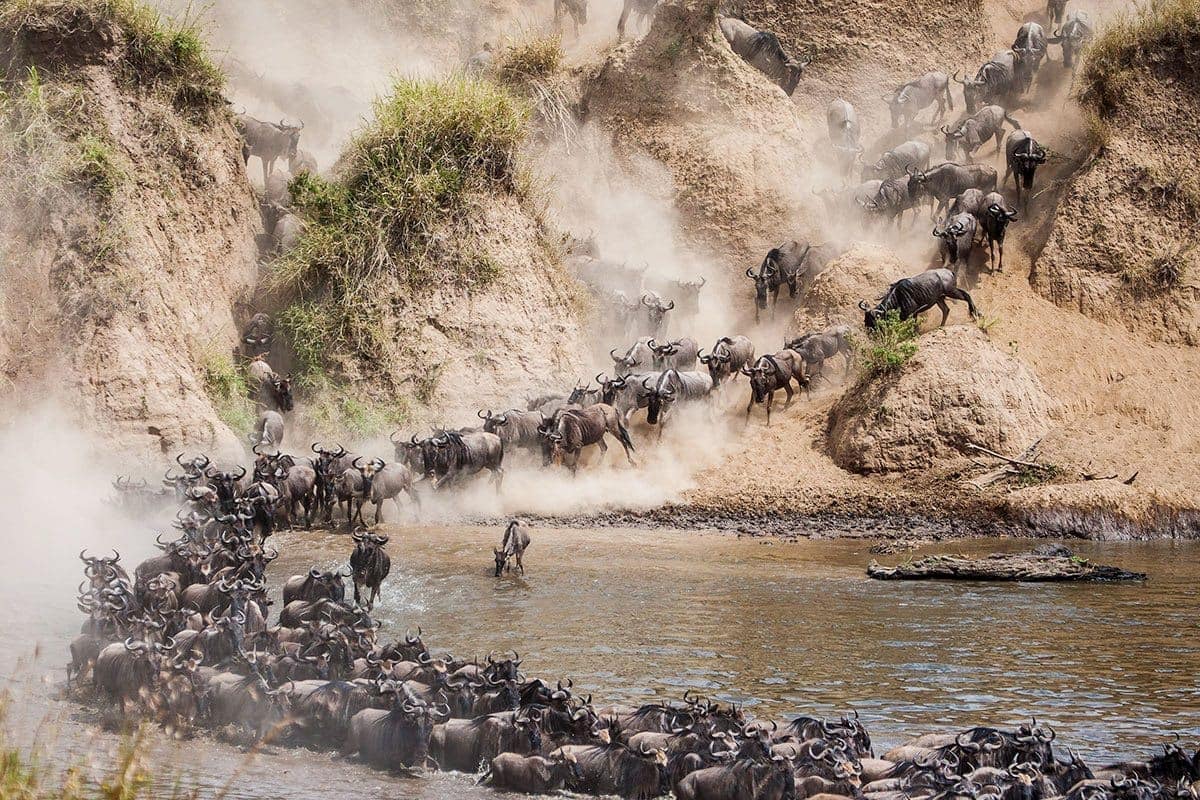
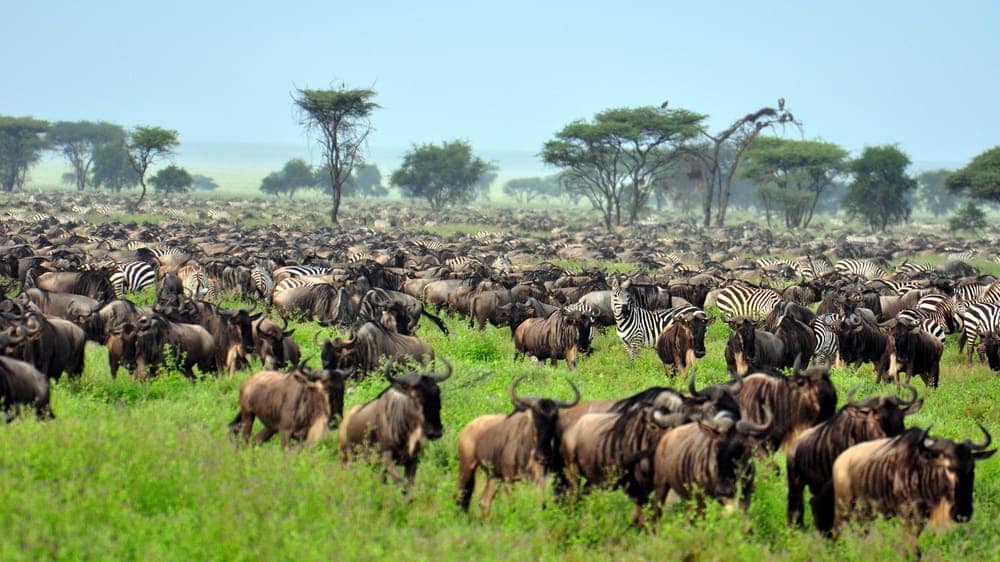
The Great Migration isn't a single event you can miss — it's a continuous, year-round loop of around two million wildebeest and zebra around the Serengeti–Mara ecosystem. The question isn't whether you'll see it, but where the herds will be when you travel.
Calving happens in the southern Serengeti and Ndutu around January–February; the herds move north and west through the middle of the year; and the dramatic Mara River crossings happen in the north around July–September.
Roughly two million wildebeest and zebra circle the Serengeti–Mara ecosystem every year, chasing the rains and fresh grass. There's no single 'migration season' — only a question of where the herds are in the cycle when you travel.
When to go
Tanzania is a year-round destination, but the dry season — June to October — offers the easiest game viewing, as thinner vegetation and shrinking water sources concentrate animals and make them easier to spot. The green season (November to May) is lush, quieter and cheaper, with the calving spectacle as its highlight.
We break the timing down in detail in our migration and best-time guides.
What a safari day feels like
Game drives are timed around dawn and dusk, when animals are active and the light is magical, with the hot middle of the day for resting. You travel in a 4x4 with a pop-up roof, your guide reading tracks and radioing sightings, with picnic lunches or returns to camp in between.
- 05:30 — Wake to coffee at campbefore dawn
- 06:00 — Morning game drive — predators on the movebest light
- 10:00 — Brunch back at camp
- Midday — Rest through the heat as the bush goes quietsiesta
- 16:00 — Afternoon drive into golden lightbest light
- 18:30 — Sundowner as the sky turns
- Evening — Dinner under an enormous skystars
Game drives are built around dawn and dusk, when animals are most active and the light is best. The hot middle of the day is for resting — yours and theirs.
Got a question while you read? Ombeni answers personally — usually within a few hours.
Browse all our safaris →What it costs
Safari prices are driven by park fees (which are significant and fixed), your style of accommodation, the season, and your group size. Like Kilimanjaro, a large chunk is non-negotiable, so very cheap safaris usually mean rushed routes or thin service. Our safaris span budget to comfort tiers — tell us your budget and we'll match it honestly.
The Big Five and beyond
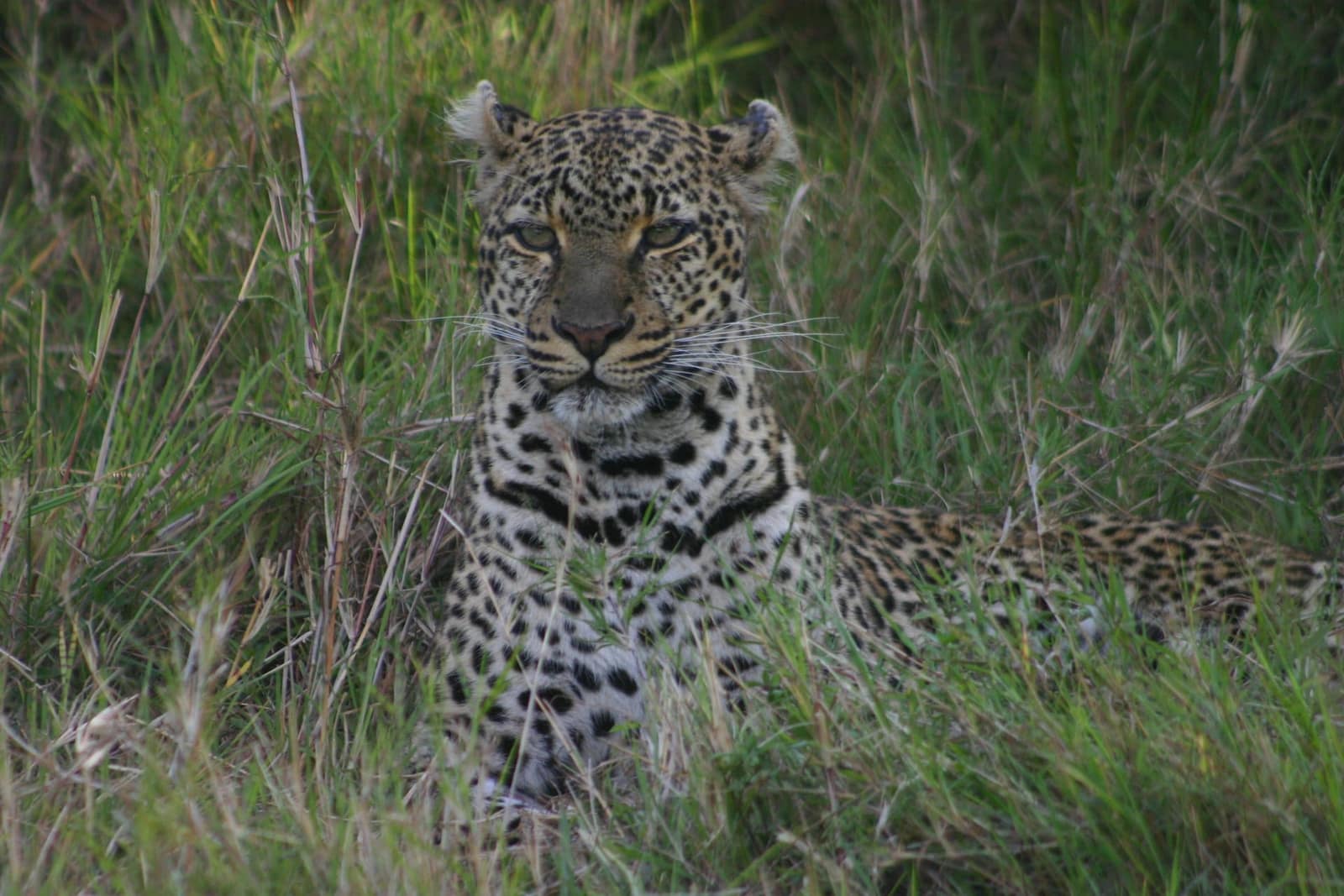
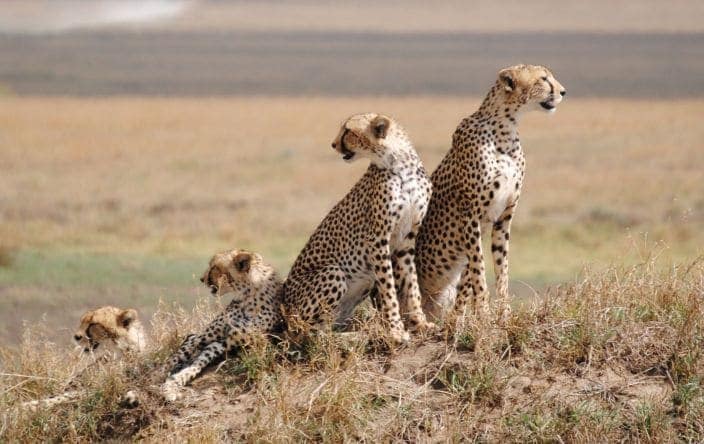
Northern Tanzania is one of the best places on the planet to see the Big Five — lion, leopard, elephant, buffalo and rhino — with the Ngorongoro Crater offering perhaps the single best chance of a clean sweep, including the rare black rhino. Beyond them you'll meet cheetah, giraffe, hippo, vast herds of plains game and hundreds of bird species.
Planning yours with Trust Tours
We're an Arusha-based, licensed operator (TALA Class A, No. 014216) running our own vehicles and guides — the people who actually drive you are part of our team. Browse our safaris below, or message Ombeni with your dates, budget and must-sees and we'll design the route around you.
Frequently Asked Questions
Ready to take the next step?
Browse all our safaris →